

Pest Control
We only like natural methods of pest control. We never use pesticides and urge you not to either, particularly when plants are in flower as this can harm bees and the other plants they may then visit. Pesticides can be counterproductive by killing the natural predators of the bug that is targeted, thus leading to a greater resurgance of the bug later on. Because we value the health of your plants and flowers, we acknowledge that every insect and creature plays an essential part in the eco-system of your garden.
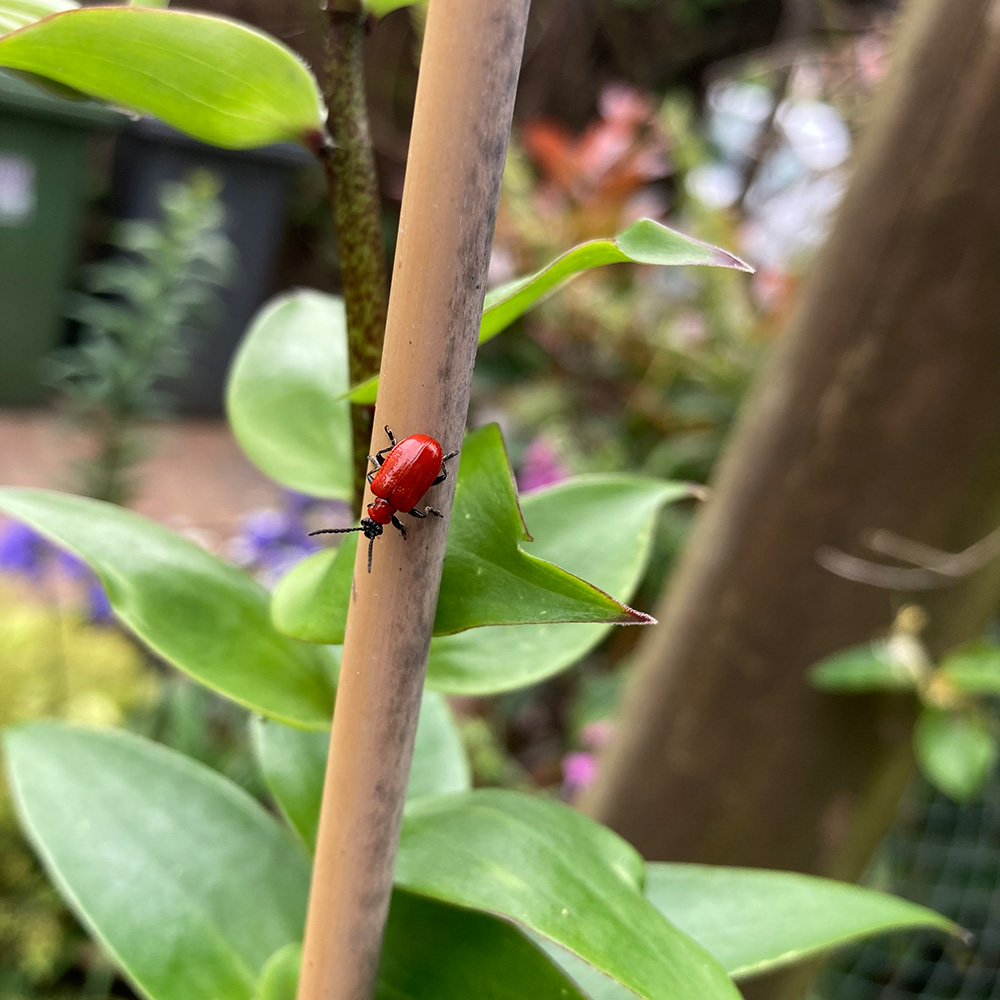
Lily beetle
Lilies (Lilium), giant lilies (Cardiocrinum) and fritillaries (Fritillaria) can be defoliated by lily beetle.
What is red lily beetle?
Lily beetle is a leaf beetle (family Chrysomelidae) with about 250 species found in Britain. They all feed on plants, most are do not have a noticeable effect on garden plants, range in size from size from 1 mm to 18 mm, many are colourful and many species are local or rare. More information on British leaf beetles can be found from UK Beetles.
Lily beetle and its larvae feed on the leaves of lilies and fritillaries. The adult beetles are very occasionally found on other plants but lilies and fritillaries are the only plants on which eggs are laid and the grubs develop. Plants can produce a good display of flowers despite leaf damage although heavy defoliation in early summer can result in undersized bulbs, which may not flower next year. Lily beetle has become widespread in Britain and Ireland since the early 1990s.
Quick facts
Common name: Red lily beetle or lily beetle
Plants affected: Lilies (Lilium) fritillaries (Fritillaria)
Main symptoms: Foliage is eaten by red beetles and their black excrement-coated grubs
Most active: Late March to October
Liquid methods of lily beetle control
At the first sign of attack, spray plants with sunflower oil. Treatment is more effective on larvae than adults, this is effective as it creates a film over the breathing holes of the larvae, therefore suffocating them.
Biology
Red lily beetle overwinters as adult beetles in soil, leaf litter and other sheltered places. This could be anywhere, not necessarily in the vicinity of lilies and fritillaries. They can also fly and find new hosts in the spring. They find lilies and fritillaries at least in part by volatile chemicals given off by the leaves, the adult beetles will also produce aggregation pheromones drawing more beetles to suitable host plants. Consequently, there is no advantage in attempting to treat the soil below lily plants. The beetles begin emerging on sunny days in late March and April when they seek out the foliage of host plants.
Eggs are laid in small batches on the underside of leaves during April to mid-summer. The eggs hatch and the larvae feed on the foliage. When fully fed, the larvae go into the soil to pupate. The next generation of adult beetles emerges from mid-summer onwards. These beetles add to the feeding damage but there is only one generation a year and these late summer adults will not mate and lay eggs until the following year.